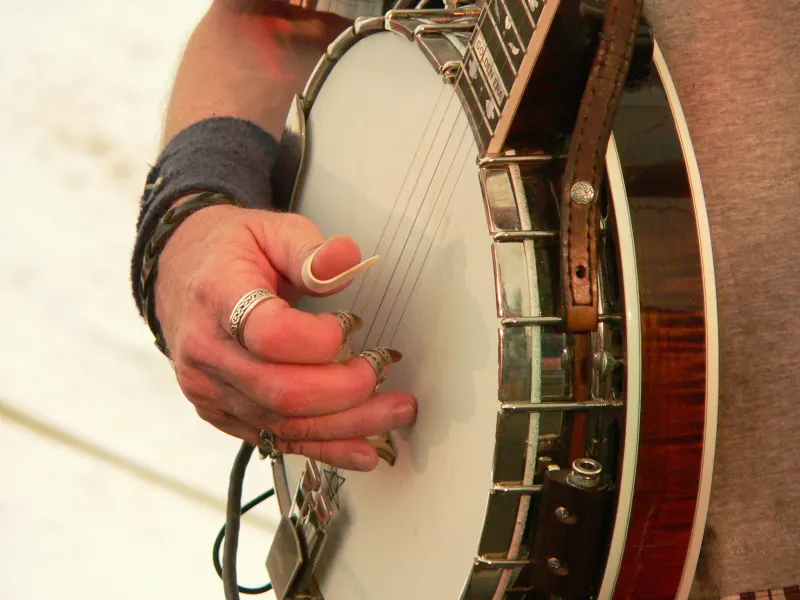
Bluegrass has a reputation for being difficult: fast, technical, full of rules and people who care about them. Some of that is true. But underneath it is some of the most exciting, joyful and heartbroken music America has produced, and you do not need to know anything to enjoy it. Here is a way in.
What to listen for
A bluegrass band is five or six acoustic instruments, and each one has a job. Once you can hear the jobs, the music makes sense.
- The banjo rolls: a constant stream of notes from three fingers picking in patterns, driving the band forward. This is the sound Earl Scruggs invented in the 1940s, and it is the first thing most people notice.
- The mandolin chops. On the off-beats, the mandolin player damps a chord to make a sharp click, like a snare drum. Bluegrass has no drums; the mandolin is the drummer.
- The bass holds the downbeat, usually alternating two notes, and the guitar fills in the rhythm and the runs between chords.
- The fiddle sings the long notes between the others, and takes solos.
- Everyone takes a break. Like a jazz band, the instruments take turns soloing on the melody. Listen to how each player does it differently.
Then there is the singing. Bluegrass harmony is close and high, with the tenor singing above the melody, strained and bright — the "high lonesome sound". It can take a few listens to hear it as beautiful. Once it clicks, it does not unclick.
Ten records to start with
A short list, oldest first, all easy to find on any streaming service:
- Bill Monroe and his Blue Grass Boys — "Blue Moon of Kentucky" (1946). The founder, with Lester Flatt and Earl Scruggs in the band. Where it all begins; our history of bluegrass tells the story.
- Flatt & Scruggs — "Foggy Mountain Breakdown" (1949). The banjo tune everyone knows, even if they do not know they know it.
- The Stanley Brothers — "Man of Constant Sorrow" (1950s). Ralph Stanley's voice out front, with his brother Carter beside him. Rawer and more mournful than Monroe.
- The Osborne Brothers — "Rocky Top" (1967). Now sung at every University of Tennessee football game, and one of the most famous tunes in the music.
- **J.D. Crowe & the New South — J.D. Crowe & the New South (1975).** A modern band with Tony Rice and Ricky Skaggs in it. Many players call it the most influential bluegrass album of its era.
- **Tony Rice — Manzanita (1979).** Flatpicking guitar at its most graceful.
- **Alison Krauss & Union Station — Every Time You Say Goodbye (1992).** A pure, clear voice and one of the best bands the music has had.
- Ralph Stanley — "O Death" (2000). Unaccompanied, from the O Brother, Where Art Thou? soundtrack. It won him a Grammy at 75.
- **Billy Strings — Home (2019).** The young guitarist who plays bluegrass to rock-festival crowds. It won the Grammy for Best Bluegrass Album.
- **Molly Tuttle & Golden Highway — Crooked Tree (2022).** Clawhammer-inspired guitar and great songs. Another Grammy winner.
Where to hear it
Bluegrass is rarely heard on commercial country radio, and has not been for decades. It lives on public radio, at festivals, and online.
Bluegrass Country, based in Washington, plays it around the clock and is one of the best places to start; every song it plays shows up on its page here, so you can find the artists you like. Our bluegrass stations page lists the others, including gospel-bluegrass stations for the hymns that are a big part of the tradition.
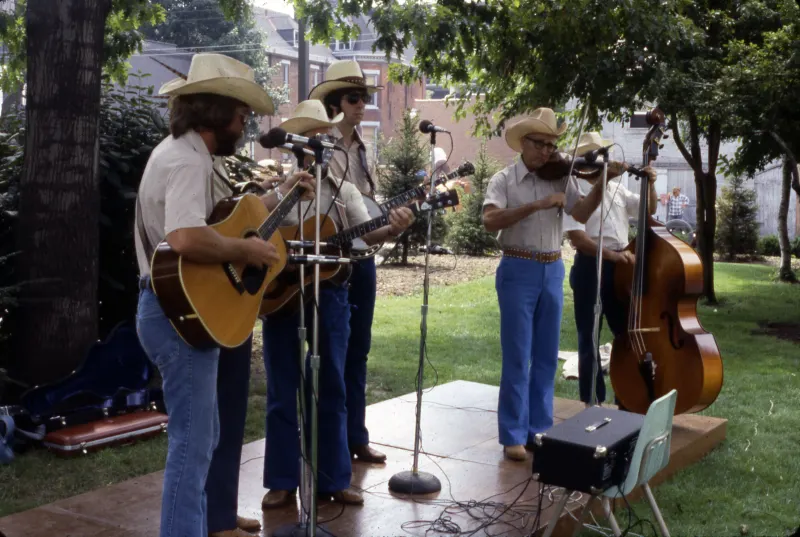

Go and see it
Bluegrass is best live, ideally outdoors. The big festivals are friendly places for newcomers, and the jam sessions in the campgrounds are half the point:
- MerleFest, in Wilkesboro, North Carolina, every spring, founded in memory of Doc Watson's son Merle.
- Telluride Bluegrass Festival, in the Colorado mountains every June, running since the 1970s.
- Bill Monroe's Bean Blossom Bluegrass Festival, in Indiana, the oldest continuously running bluegrass festival.
- IBMA's World of Bluegrass, every autumn, where the industry and the fans meet.
One more thing
Do not worry about the rules. Bluegrass people argue endlessly about what counts, and the argument is part of the fun. Bill Monroe himself would not have recognised some of what is played under his banner today, and he did not like all of it. Listen to what moves you, and follow it.