Country music was made for the radio, but it was raised in bars. The honky-tonk — a room with a bandstand, a dance floor and cold beer — is where the steel guitar got loud, where the shuffle rhythm was born, and where most country singers still learn their trade. Here are six worth the trip, and one that is gone.
Tootsie's Orchid Lounge — Nashville
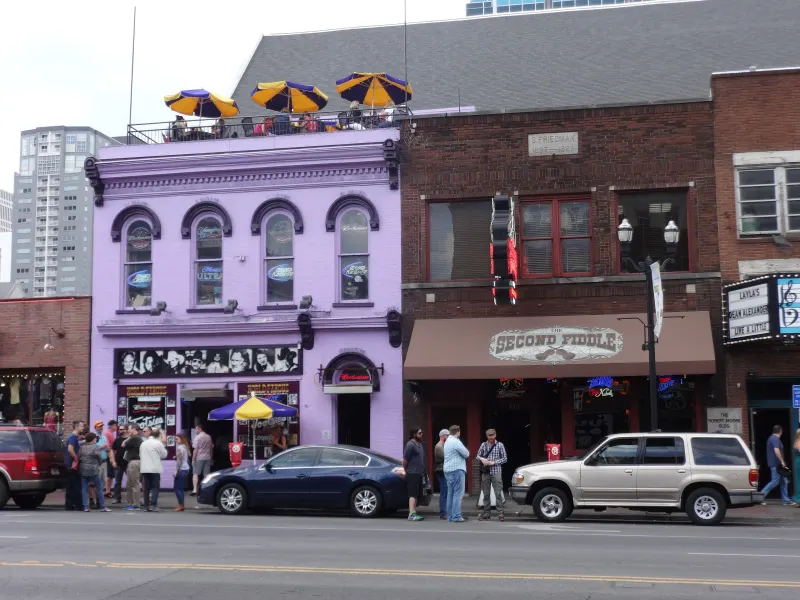
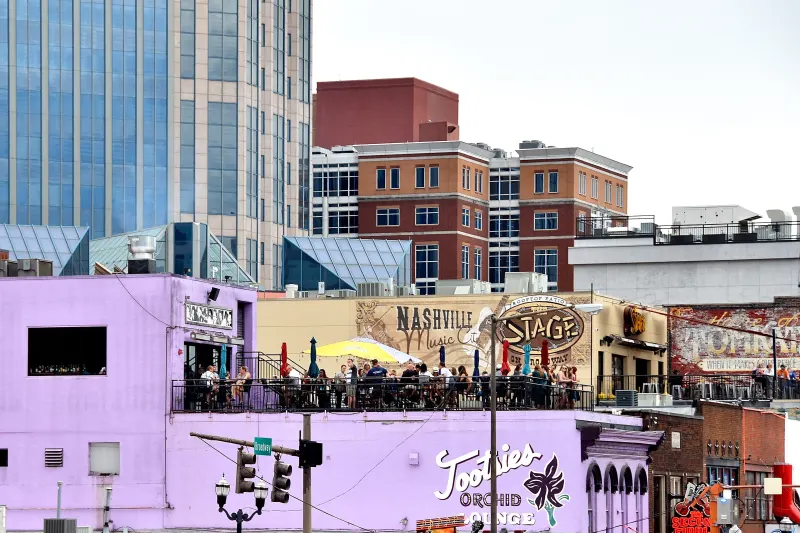
Tootsie Bess took over a bar on Lower Broadway in 1960, and after a painter's mistake, so the story goes, it came out purple. It sat across the alley from the back door of the Ryman Auditorium, then the home of the Grand Ole Opry, and between sets Opry performers would slip across for a drink. Songwriters who had not made it yet — Willie Nelson, Kris Kristofferson, Tom T. Hall among them — drank there too, and Tootsie was famous for looking after the broke ones.
Today Lower Broadway is a neon strip of bars with live music from mid-morning to the small hours, and Tootsie's, still purple, is the one everyone photographs. It is loud, crowded and full of tourists — and the bands are good.
.jpg)
Robert's Western World — Nashville
A few doors down, Robert's started out as a shop selling boots and western wear, and gradually became a bar. It has kept a reputation as the most traditional room on Broadway: the house bands play honky-tonk and western swing the way Ernest Tubb and Ray Price did, and people actually dance. If the rest of Broadway is a party, Robert's is a honky-tonk.
Gruene Hall — New Braunfels, Texas
Built in 1878 by a German settler as a dance hall for the local cotton farmers, Gruene Hall claims to be the oldest continually operating dance hall in Texas. It is a long wooden hall with side windows that open to the Texas air and old advertising signs on the walls.
George Strait played here early in his career, as did Lyle Lovett, and the list of people who have followed is most of Texas music. Go on a Sunday afternoon, when the doors are open and the band is playing to families as well as dancers, and you will understand why people drive for hours to get there.
The Broken Spoke — Austin
James White opened the Broken Spoke on South Lamar in 1964, when it stood on the edge of town. Austin grew up around it, but the Spoke barely changed: low ceilings, a long dance floor, chicken-fried steak, and live country music. Bob Wills played here, and so did Willie Nelson and George Strait. White ran it for almost sixty years, until his death in 2023, and his family keeps it going. It is the place to learn to two-step.
Billy Bob's Texas — Fort Worth
At the other end of the scale, Billy Bob's in the Fort Worth Stockyards bills itself as the world's largest honky-tonk. It opened in 1981 in a building that once housed cattle pens, and it is enormous: dozens of bars, a concert stage, and an indoor arena for live bull riding. Big names have been recording live albums here for decades.
Cain's Ballroom — Tulsa
Built in the 1920s as a garage, Cain's Ballroom became the home of western swing. From 1935 Bob Wills and His Texas Playboys played dances here and broadcast from it on KVOO every day at noon, and the sprung maple dance floor they played to is still there. So is the big portrait of Wills on the wall.
Cain's has since hosted everyone from Ernest Tubb to the Sex Pistols, who played there on their only American tour in 1978. It remains one of the great concert rooms in the country.
Gone: Gilley's
Gilley's, in Pasadena, Texas, was a vast honky-tonk co-owned by the singer Mickey Gilley, famous for its mechanical bull and for the 1980 film Urban Cowboy, which was set there and started a nationwide craze. It closed in 1989 after a falling-out between its owners, and the building burned down the next year. Its story is in chapter eight of our history.
Can't get there?
The next best thing is a station that sounds like a Saturday night in one of these rooms. Our honky-tonk, Texas country and western swing stations are the place to start.