Ask a country fan in Dallas or Tulsa who their favourite singer is, and there is a fair chance the answer will be someone most of America has never heard of. Texas and Oklahoma have their own country music, with its own venues, its own radio, its own charts and its own stars — and for most of the last fifty years it has got along without Nashville perfectly well.
Where it came from
The Texas scene grew out of the outlaws. When Willie Nelson and Jerry Jeff Walker made Austin a country music town in the early 1970s, they showed that a singer could build a career in Texas, playing to Texans, without a Nashville label deciding what the records sounded like. A generation of songwriters followed: Guy Clark, Townes Van Zandt, Lyle Lovett, and above all Robert Earl Keen, whose "The Road Goes On Forever", a story-song about two small-time outlaws, became the anthem of the whole scene.
Red dirt has its own origin story, just across the Red River in Stillwater, Oklahoma, a university town whose soil is the colour of rust. In the late 1970s and 1980s a big old house outside town called the Farm became a gathering place for songwriters. The most important of them, Bob Childers, is often called the godfather of red dirt; the Red Dirt Rangers took the name for their band, and it stuck to the whole music.
What it sounds like
Texas country and red dirt are cousins, not twins, and fans will tell you the difference at length. Very roughly:
- Texas country leans on the dance hall: shuffles, fiddles, two-steps and waltzes, and a direct line back to Bob Wills and George Strait.
- Red dirt leans on the songwriter and the bar band: rougher, closer to rock, with a lot of Tom Petty and Bruce Springsteen in it alongside the country.
Both value songs over polish, and both are built for playing live.
The circuit
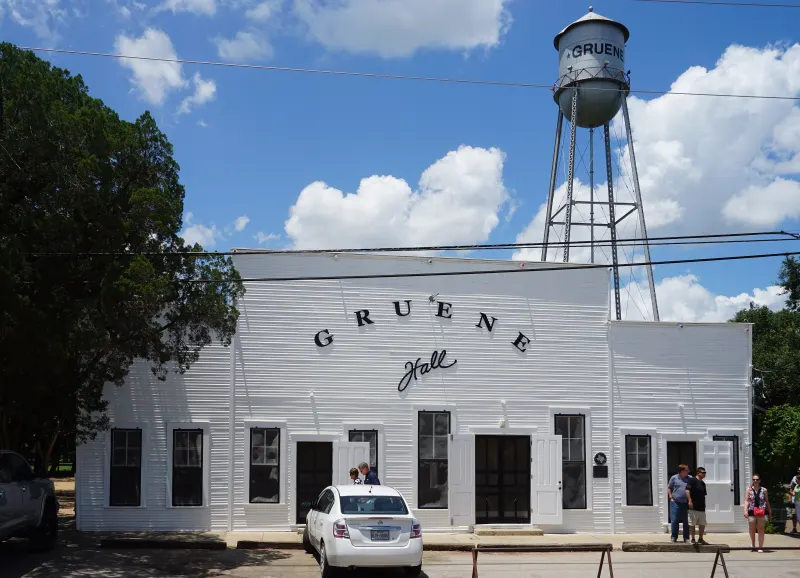
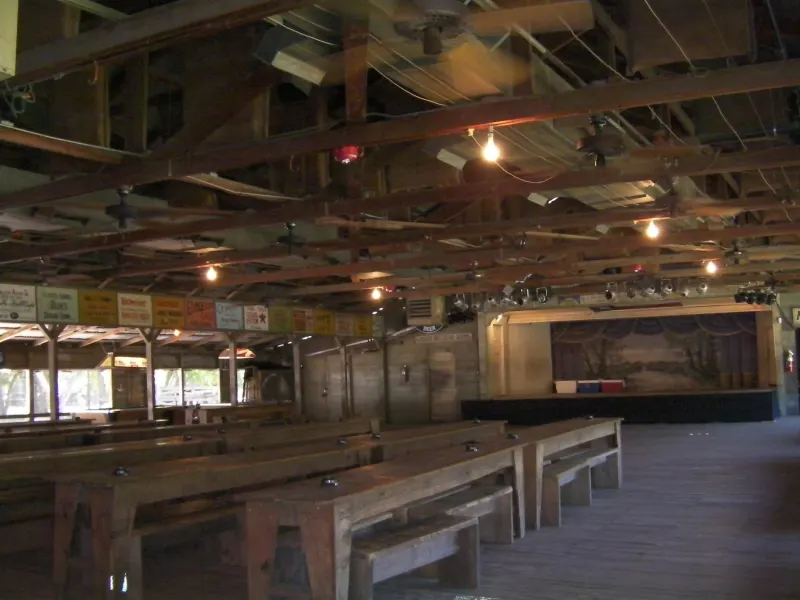
What makes the scene work is a circuit of places to play. Historic dance halls like Gruene Hall, the oldest continually operating dance hall in Texas; college-town bars in Stillwater, Lubbock, San Marcos and College Station; and big outdoor festivals where tens of thousands of fans know every word to songs that have never been played on national radio.
In the 1990s and 2000s that circuit made stars of Pat Green, Jack Ingram, the Randy Rogers Band and Wade Bowen in Texas, and of Cross Canadian Ragweed, Jason Boland & The Stragglers and Stoney LaRue out of Oklahoma. The Turnpike Troubadours, from Tahlequah, Oklahoma, became perhaps the most loved band the scene has produced; when they came back from a long hiatus in 2022, their shows sold out in minutes.

Its own radio
Texas has something no other state has on the same scale: radio stations that play Texas artists as a format of their own, and a separate chart, the Texas Regional Radio Report, that tracks what they play. A song can be a number one in Texas and never be heard in Tennessee. For an independent artist, that is a living.
You can hear it in our directory. Radio Free Texas and Texas Rebel Radio play the Texas circuit, and KOKE FM in Austin carries on a name that went on the air in the outlaw days. Our Texas country and red dirt pages list the rest.
Nashville comes calling
The line between the scene and the mainstream has been getting thinner. Cody Johnson, a former rodeo bull rider who built his audience on the Texas circuit, turned down the usual Nashville route for years and then scored national number ones on his own terms. Parker McCollum came up the same way. Koe Wetzel took his rowdy red-dirt-meets-grunge sound from Texas college bars to arenas. And Zach Bryan, from a small town in north-east Oklahoma, became one of the biggest stars in American music with a sound that owes a great deal to red dirt.
Our own logs show how far it has travelled. In our first thirty hours of listening, Cody Johnson was played on 95 stations and Parker McCollum on 70 — including plenty a long way from Texas.
Where to start
If you are new to it, try Robert Earl Keen's West Textures, which includes "The Road Goes On Forever"; the Turnpike Troubadours' Goodbye Normal Street; Cross Canadian Ragweed's self-titled "purple album"; and Cody Johnson's Human: The Double Album. Then find a Texas station on the dial and leave it on.