By 1970 Nashville ran country music like a factory, and a very successful one. A producer chose the songs, the A-Team played on them, the artist sang, and the label decided what went out. For a singer who was happy with that, it worked. For a singer who wrote his own songs and wanted them to sound a particular way, it was a cage.
Willie goes home
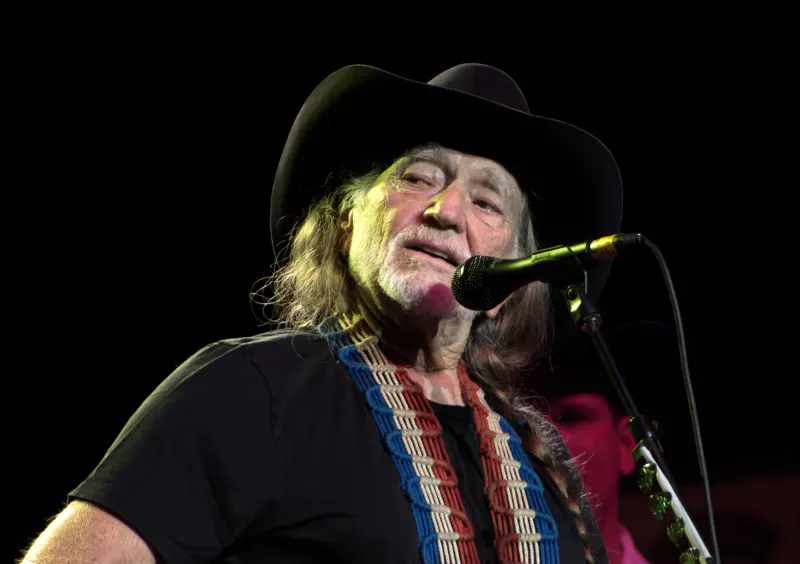
Willie Nelson had been one of the best songwriters in Nashville for a decade. "Crazy" for Patsy Cline, "Hello Walls" for Faron Young, "Night Life", "Funny How Time Slips Away" — his songs made other people rich. But his own records, dressed up in the Nashville manner, did not sell, and the industry did not know what to do with his voice or his phrasing, which floated behind and around the beat like a jazz singer's.
After his house outside Nashville burned down at the end of 1969, Nelson moved back to Texas, and by 1972 he had settled in Austin. It was the right place at the right moment. Austin was a college town full of hippies, and a former National Guard armoury had been turned into a music hall called the Armadillo World Headquarters, where long-haired students and cowboys found, to their mutual surprise, that they liked the same music. Nelson grew his hair, started a Fourth of July picnic that became an annual festival, and played to both.
Waylon takes the controls
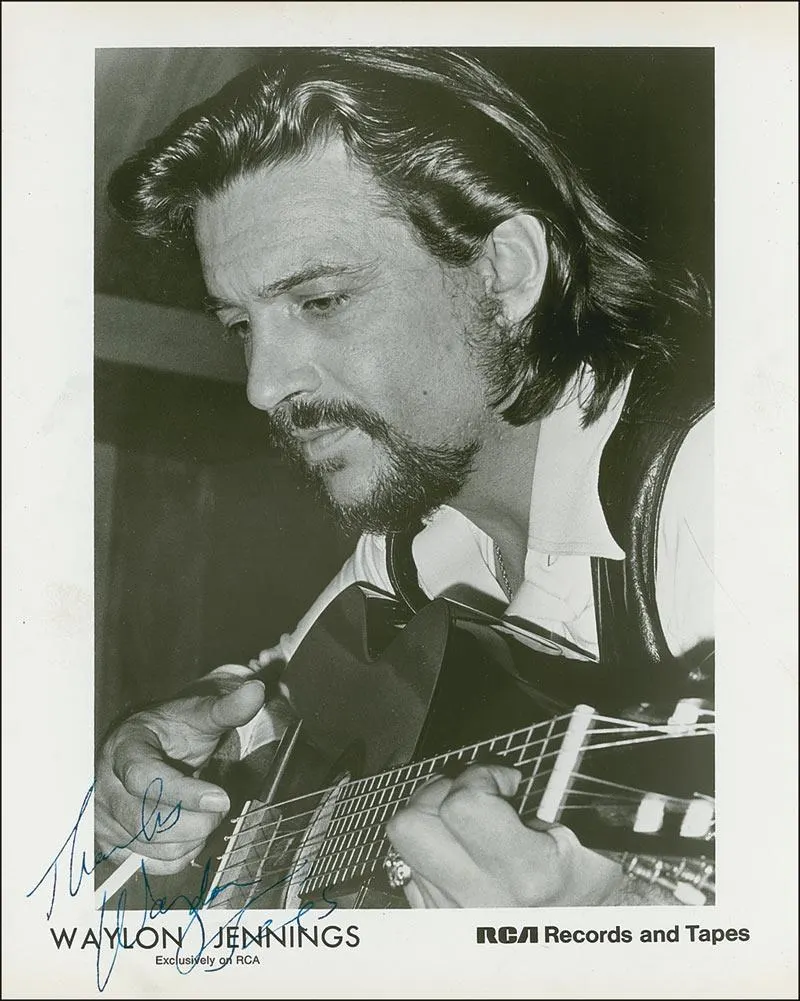
Waylon Jennings had come to country music by way of rock and roll: he was Buddy Holly's bass player, and famously gave up his seat on the plane that crashed in February 1959, killing Holly. In Nashville RCA made him a star, but Waylon hated the way his records were made. He wanted to use his own band, and to choose his own songs.
In the early 1970s he got his way. With a tough new manager, he renegotiated his contract to get creative control, and in 1973 made Honky Tonk Heroes, an album of songs almost all written by the unknown Texan Billy Joe Shaver, played by his own road band, the Waylors. It sounded like nothing else coming out of Nashville: hard, spare and swaggering. "Are You Sure Hank Done It This Way", in 1975, asked the question outright.
Around them a loose circle formed. Tompall Glaser ran a studio in Nashville, Hillbilly Central, where they could work without label supervision. Kris Kristofferson, a Rhodes scholar who had swept floors at Columbia's studios, wrote "Sunday Mornin' Comin' Down", "Me and Bobby McGee" and "Help Me Make It Through the Night". In Texas, Jerry Jeff Walker, Townes Van Zandt and Guy Clark were writing songs that took their time.
Red Headed Stranger
In 1975 Nelson signed with Columbia on terms that let him make the record he wanted. He delivered Red Headed Stranger, a concept album about a preacher who kills his wife and her lover, recorded for very little money in a few days in Texas with a small band. It sounded so bare that the label thought it was a demo. It went on to sell millions, and its single, a cover of the old Fred Rose song "Blue Eyes Crying in the Rain", went to number one.
Wanted! The Outlaws
The movement got its name from a publicist and a song — "Ladies Love Outlaws", which Waylon recorded in 1972 — and it got its breakthrough from a marketing man at RCA. In 1976 the label put out Wanted! The Outlaws, a compilation of mostly existing tracks by Waylon, Willie, Tompall Glaser and Jessi Colter, Waylon's wife, with a sleeve designed like a Wild West wanted poster.
It became the first country album to be certified platinum, for a million sales. Nashville noticed. Within a couple of years every label wanted an outlaw, and the word, as these things do, came to mean a look — beards, black hats, leather — as much as a way of making records.

In 1977 Waylon had a number one with "Luckenbach, Texas (Back to the Basics of Love)", about a tiny Hill Country town that the humorist Hondo Crouch had bought and turned into an unofficial capital of the scene. Willie and Waylon's "Mammas Don't Let Your Babies Grow Up to Be Cowboys" followed in 1978. And in Alabama, Hank Williams Jr. stopped imitating his father and started writing rowdy songs of his own, like "Family Tradition".
On the radio
The outlaws were at first as much an FM phenomenon as a country-radio one. In Austin, KOKE-FM coined the term "progressive country" in the early 1970s for a format that played Willie, Jerry Jeff and Michael Martin Murphey alongside rock bands, and the same records turned up on the free-form FM stations that college students listened to. In 1974 a pilot for a PBS concert series was filmed in Austin, with Willie Nelson on stage. Austin City Limits is still on the air.
By the end of the decade the outlaws had won the argument about who controlled the music, and lost it about how long any movement stays fresh in Nashville. But the idea that a country singer could do it their own way never went away. It runs straight through the Texas and red dirt scenes, alt-country, and the songwriters of today who have made their names without country radio's help at all.
Hear it now
Outlaw Country Radio and our outlaw country stations play Willie, Waylon and the songwriters who followed them. The KOKE-FM name lives on in Austin, and KOKE FM is in our directory. For the scene that grew out of the outlaws, read red dirt and Texas country.