In the summer of 1954 a nineteen-year-old truck driver recorded a sped-up version of Bill Monroe's "Blue Moon of Kentucky" at a small studio in Memphis. Country stations were not sure what to make of Elvis Presley — some would not play him because he sounded too Black, others because he sounded too wild — but teenagers were in no doubt. Within two years, rock and roll had taken a large part of country music's young audience, and record sales in Nashville were falling.
The Nashville Sound
Nashville's answer came from two producers. Owen Bradley at Decca and Chet Atkins at RCA — Atkins was himself one of the finest guitarists who ever lived — decided that if country could not beat pop, it could borrow its clothes. They took out the fiddles and much of the steel guitar, added soft backing vocals from groups like the Jordanaires and the Anita Kerr Singers, and sometimes a string section, and they aimed the records at grown-ups who found rock and roll too loud.
They made the records with a small group of session players who became known as the A-Team: guitarists Grady Martin and Hank Garland, pianist Floyd Cramer, bassist Bob Moore, drummer Buddy Harman and a handful of others. They worked fast, often recording four songs in a three-hour session, from charts written in Nashville's own shorthand, the number system. RCA's Studio B, opened in 1957, and Bradley's Quonset Hut studio on 16th Avenue turned out hit after hit, and the few blocks around them became Music Row.
The sound had its critics then and has more now: to purists it was country music with the country taken out. But it produced some of the finest singing the genre has ever had. Jim Reeves' velvet "He'll Have to Go". Eddy Arnold's "Make the World Go Away". And above all Patsy Cline.
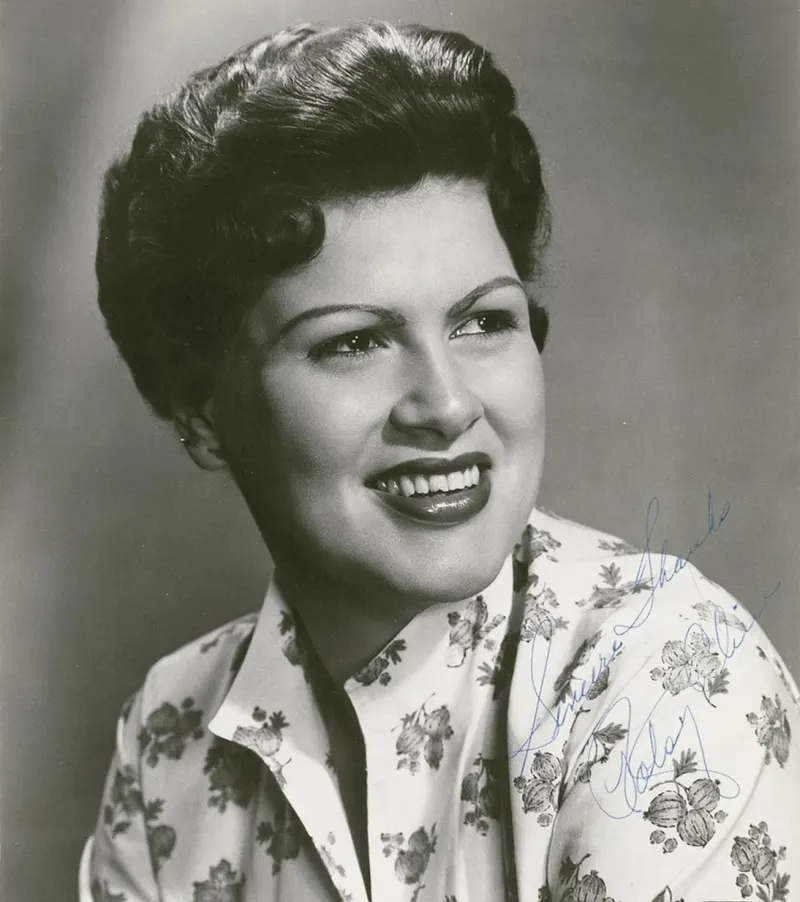
Patsy
Patsy Cline was from Virginia, sang with enormous power and control, and did not especially want to sing ballads — she was a honky-tonk singer at heart. Bradley talked her into it. "Walkin' After Midnight" was a hit in 1957. In 1961 came "I Fall to Pieces", by Hank Cochran and Harlan Howard, and "Crazy", written by a young songwriter named Willie Nelson. She was one of the first women in country to headline her own shows, and a loyal friend to younger singers like Loretta Lynn.
On 5 March 1963 the small plane carrying her home from a benefit concert in Kansas City crashed near Camden, Tennessee, killing her along with Cowboy Copas and Hawkshaw Hawkins. She was 30. Her greatest hits album has barely stopped selling since.
The all-country station
While Nashville was reinventing the records, radio was reinventing itself. Television took over as America's evening entertainment in the 1950s, and radio stations, losing their big shows, turned to playing records all day, each station choosing a single kind of music.
KDAV in Lubbock, Texas, which went on the air in 1953, is usually credited as the first station to play country music full time. (A local teenager called Buddy Holly played on its Sunday afternoon show.) It was not common yet. Advertisers thought country listeners were poor and rural, and most station owners agreed.
The Country Music Association was founded in Nashville in 1958 largely to change their minds. It sent presentations to advertising agencies showing who country listeners actually were — working people with money to spend in the growing cities — and it lobbied stations to switch. It worked. At the start of the 1960s there were only a few dozen full-time country stations in the United States; by the end of the decade there were several hundred, and the country station, with its disc jockeys and its playlist of current hits, became part of American life.
Bakersfield
Not everyone wanted strings. In Bakersfield, California, in the oilfields and cotton country of the Central Valley, lived thousands of families who had come west from Oklahoma, Arkansas and Texas in the Dust Bowl years. Their honky-tonks wanted loud, hard, danceable country, and they got it.
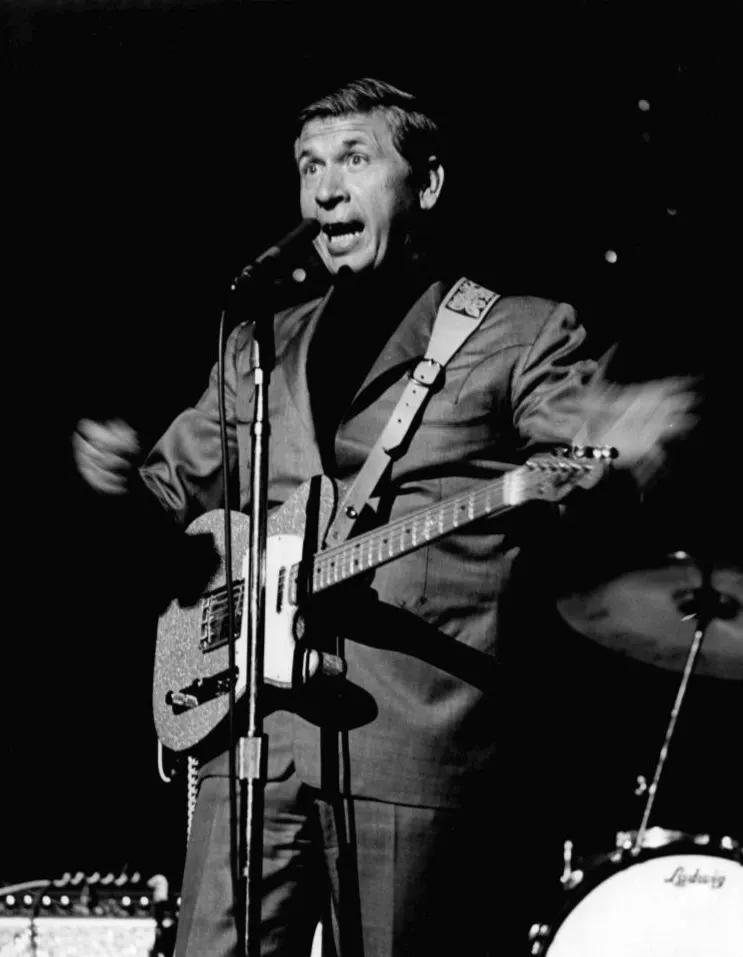

Buck Owens and his band the Buckaroos played Fender Telecasters, turned up bright and cutting, with Don Rich's guitar and harmony vocal alongside Buck's. Records like "Act Naturally" (which the Beatles covered) and "I've Got a Tiger by the Tail" had a stripped, driving sound that was everything Music Row was not. Owens had more than a dozen number ones in the 1960s, and then co-hosted the television show Hee Haw.
Merle Haggard had been in San Quentin prison, where he saw Johnny Cash play a New Year's Day concert in 1959. Released, he became the greatest songwriter of his generation: "Mama Tried", "Sing Me Back Home", "Today I Started Loving You Again", and the defiant "Okie from Muskogee", which in 1969 made him, somewhat to his own discomfort, a spokesman for Middle America.
Cash, Loretta and Dolly
Johnny Cash had come out of the same Memphis studio as Elvis, and never quite fitted anywhere. His At Folsom Prison album in 1968 revived his career, and from 1969 his own television show brought everyone from Bob Dylan to Louis Armstrong onto the same stage as the Carter Family — Cash had married June Carter, Maybelle's daughter, the year before.
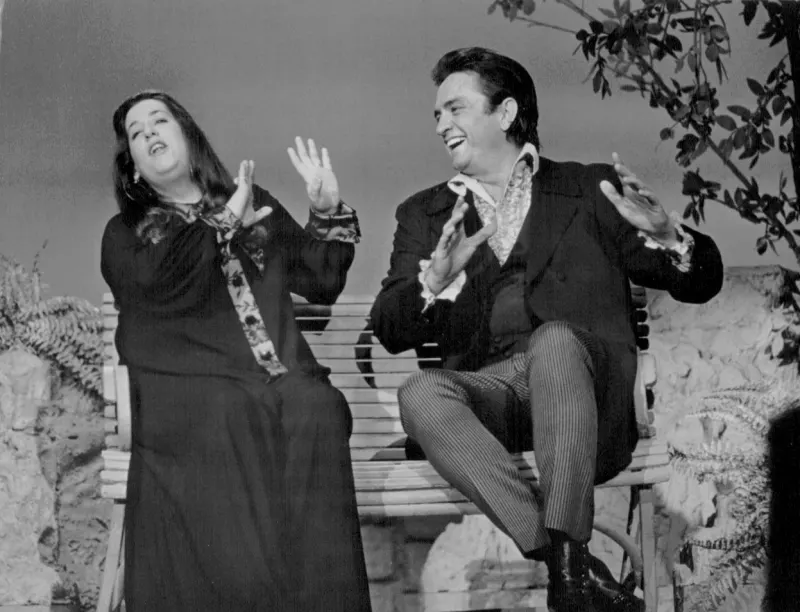

Loretta Lynn wrote about the lives of working women with a directness nobody had dared: "Don't Come Home a-Drinkin' (With Lovin' on Your Mind)", "Coal Miner's Daughter", and later "The Pill", which plenty of stations refused to play. Dolly Parton joined Porter Wagoner's television show in 1967 and was soon writing songs — "Coat of Many Colors", "Jolene", "I Will Always Love You" — that would outlast almost everything around them.
And in 1966 RCA released the first records by Charley Pride, a former Negro League baseball player from Mississippi. Some stations played them without knowing he was Black; once they knew, most kept playing them. Pride went on to have 29 number ones and became the first Black member of the Country Music Hall of Fame in 2000.
By the end of the 1960s, the Nashville Sound had gone even further upmarket — producer Billy Sherrill's lush "countrypolitan" records for Tammy Wynette and Charlie Rich — and a group of songwriters in Texas and Nashville had had enough of it. The outlaws were coming.
Hear it now
The classic country stations in our directory are built on this era: Patsy, Buck, Merle, Loretta and Johnny Cash. Try Legends of Country Radio or 181.FM Real Country.