In the early 1920s a radio station was a prestige project. Department stores, newspapers and insurance companies built them to put their names in front of the public, and then had to work out what to broadcast. One answer, it turned out, was the kind of music people played at a Saturday-night dance in a barn.
The first barn dances
WBAP in Fort Worth is usually credited with the first radio barn dance, in January 1923, when an old-time fiddler played on the air and the station's switchboard filled with calls. The idea spread quickly. In April 1924 WLS in Chicago — owned by Sears, Roebuck and named for its slogan, the World's Largest Store — launched the National Barn Dance, a Saturday-night show of fiddlers, singers, comedians and square-dance callers.
The National Barn Dance was big and polished, and for its first decade it was the most important country show in America. From 1933 it went out across the NBC network. Its roster included the Kentucky balladeer Bradley Kincaid, the comedy duo Lulu Belle and Scotty, and, for a few years in the early 1930s, a young singer from Oklahoma called Gene Autry, who would go on to invent the singing cowboy.
We Shield Millions
WSM went on the air in Nashville in October 1925. It belonged to the National Life and Accident Insurance Company, and its call letters stood for the company's slogan: We Shield Millions. To run it the company hired George D. Hay, an announcer who had made his name at WLS and who billed himself as the Solemn Old Judge.
On 28 November 1925 Hay put a 77-year-old fiddler called Uncle Jimmy Thompson in front of the microphone for an hour. Listeners called and wired in asking for more, and within weeks the WSM Barn Dance was a Saturday-night fixture.
Its name came from a joke. One Saturday in 1927 the Barn Dance followed a network broadcast of classical music on NBC, and Hay, taking the air, observed that listeners had just heard an hour of grand opera — and would now hear the "Grand Ole Opry". The name stuck from that night.
The first star of the show was Uncle Dave Macon, a banjo-playing vaudevillian from middle Tennessee. Another was DeFord Bailey, a harmonica player whose train imitation "Pan American Blues" often opened the show; he was the Opry's first Black star, and for years one of its most frequent performers. Bailey was dismissed in 1941 during a dispute between the radio networks and the songwriters' society ASCAP that stopped him playing the tunes he was known for. His dismissal is now widely seen as a shameful episode, and he was inducted into the Country Music Hall of Fame in 2005, more than twenty years after his death.
Clear channel
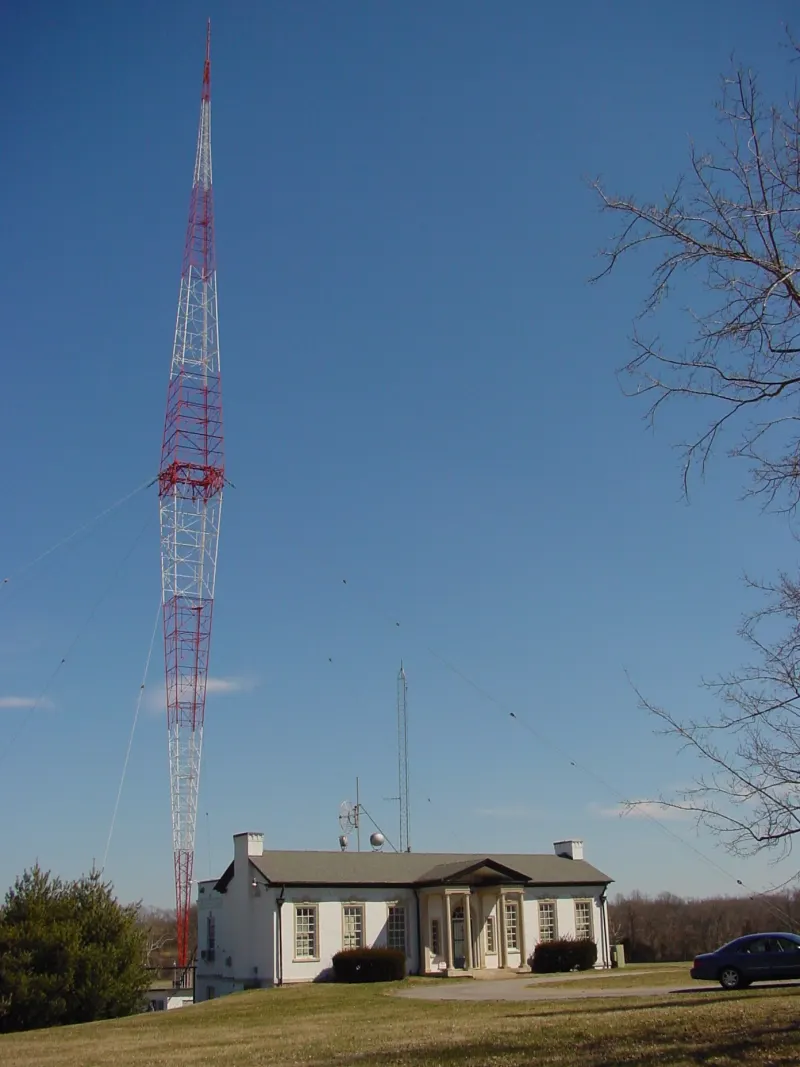
What made WSM different from a hundred other stations was power. In 1932 it went to 50,000 watts, the most the government allowed, on a clear-channel frequency, 650 kilohertz, that no other station shared at night. It put up a diamond-shaped transmitter tower south of Nashville, among the tallest in North America when it was built.
After dark, AM signals travel hundreds of miles. On a Saturday night, farm families across much of the eastern half of the United States could pick up the Opry. It was, for millions of people, the only live music they would hear all week, and it made Nashville the place a country singer had to be.
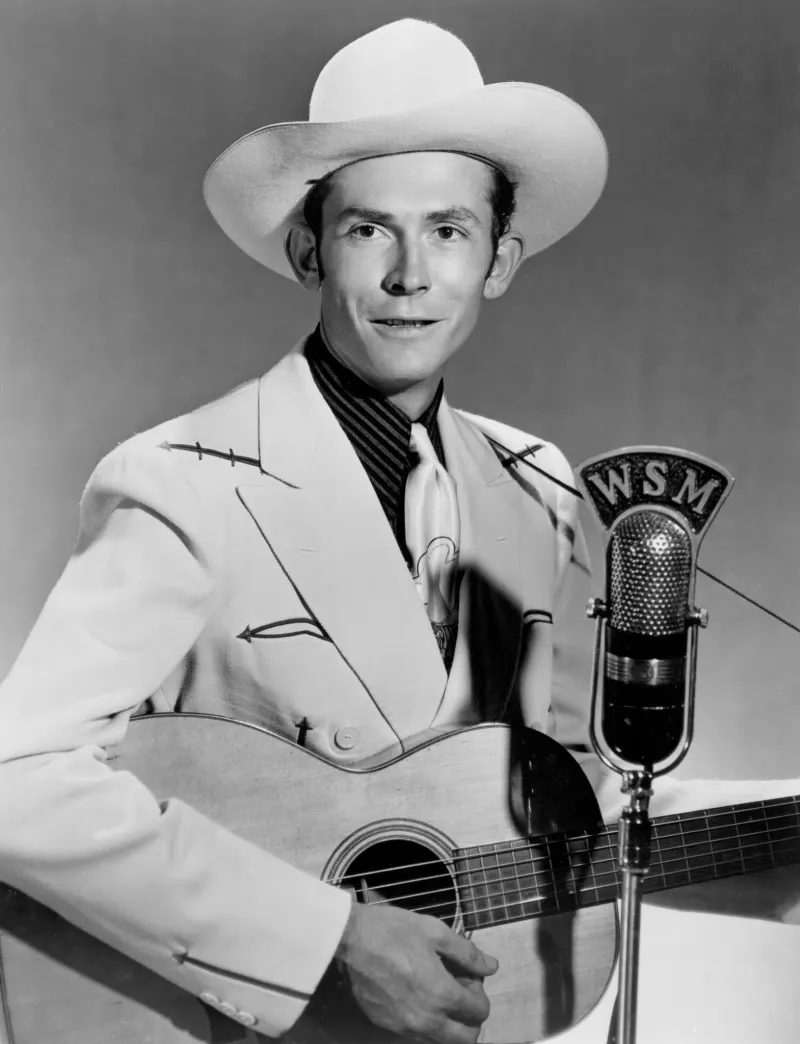

From 1939 NBC carried a half-hour of the Opry across the network, sponsored by Prince Albert tobacco, and the show's biggest star of that era, Roy Acuff, became a national name with songs like "Wabash Cannonball" and "The Great Speckled Bird". Acuff had joined the Opry in 1938; he sang with a fervour that made him, for a while, the most popular country singer in the country.
Other stages
The Opry was never the only barn dance. WWVA in Wheeling, West Virginia, started its Jamboree in 1933. The Renfro Valley Barn Dance came out of Kentucky. And from 1948 KWKH in Shreveport ran the Louisiana Hayride, which became known as the cradle of the stars: Hank Williams sang there before the Opry would have him, and in 1954, after a single Opry appearance that led nowhere, a nineteen-year-old Elvis Presley became a Hayride regular.
Moving to the Ryman
The Opry outgrew one hall after another. In 1943 it moved into the Ryman Auditorium, a brick tabernacle built in the 1890s for revival meetings, with church pews for seats and famously bad dressing rooms. It stayed there for 31 years. In 1974 it moved to a purpose-built Opry House outside town, taking a circle of wood cut from the Ryman stage with it, so performers could still stand where Hank and Patsy had.
The Opry marked its hundredth birthday in November 2025. WSM still broadcasts it, on the same frequency, every week — making it the longest-running radio show in American history.
Hear it now
WSM is in our directory, and you can play it right here: the same station, still broadcasting the Opry. There is also a dedicated Opry 100 stream celebrating the show's centenary, and our classic country stations play the voices the barn dances made famous.