Country music did not start on the radio, but it started at almost exactly the same moment radio did. In the early 1920s the record companies and the new broadcasting stations were both looking for something to fill the space they had just created, and both found it in the same place: the fiddle tunes, ballads and hymns that rural Americans in the South had been playing for generations.
The first sides
The recording usually credited as the first commercial country record was made in New York in the summer of 1922, when a Texas fiddler named Eck Robertson and his playing partner Henry Gilliland talked their way into the Victor studio. They cut "Arkansaw Traveler" as a fiddle duet, and Robertson played "Sallie Gooden" alone — performances that still sound astonishingly modern a century on. Victor did not quite know what to do with them.
The record that proved there was money in it came a year later, and almost by accident. In June 1923 Ralph Peer, a talent scout for the OKeh label, set up a temporary studio in Atlanta. A local record dealer, Polk Brockman, persuaded him to record Fiddlin' John Carson, a veteran of fiddle contests and already a voice on Atlanta's WSB. Peer reportedly thought the result was dreadful. Brockman ordered the pressing anyway, and "The Little Old Log Cabin in the Lane" sold out so quickly that OKeh signed Carson and began looking for more.
Within two years the industry had a name for what it was selling. In 1925 Peer recorded a string band from Virginia and North Carolina who, asked what they were called, offered: just call us hillbillies. The Hill Billies stuck, and so did "hillbilly music", a label that would sit on the charts for another quarter of a century.
The first million-seller
The first country record to sell in the millions was not by a mountain fiddler at all. Vernon Dalhart was a Texas-born light-opera singer working in New York, and in 1924 he recorded "The Wreck of the Old 97", a ballad about a Virginia train crash, backed with "The Prisoner's Song". It became one of the best-selling records of the decade, and it told the labels that a city audience would buy country songs too.
Ten days in Bristol
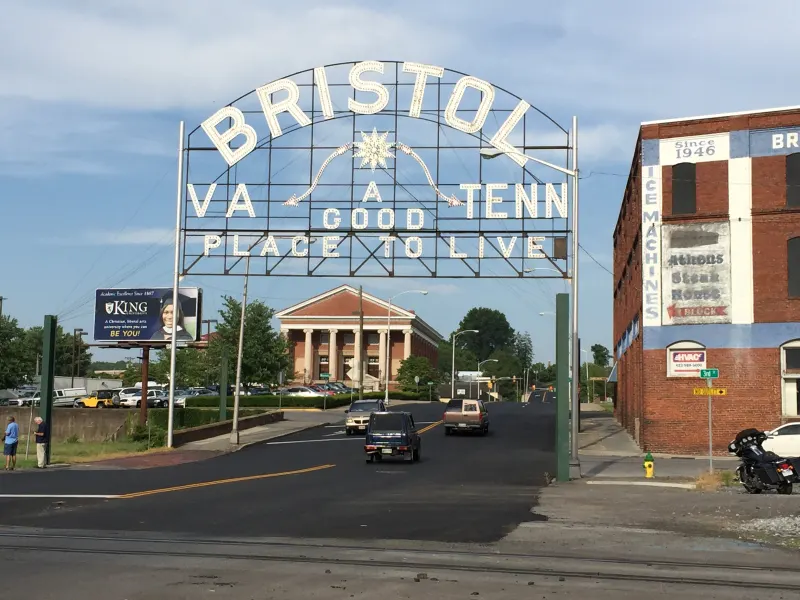
The recording session that matters most happened in the summer of 1927 in Bristol, a railroad town whose main street is the state line between Tennessee and Virginia. Peer, now working for Victor, rented space on State Street, brought in the new electrical recording equipment, and let it be known through the local paper that Victor was paying musicians to record.
People came down from the mountains to audition. Over roughly ten days at the end of July and the start of August, Peer recorded some nineteen acts. Two of them changed everything.
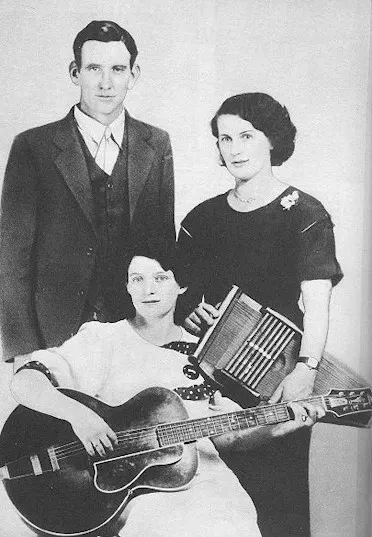
The Carter Family — A.P. Carter, his wife Sara and her cousin Maybelle — drove in from Maces Spring, Virginia. A.P. collected songs, rewriting old ballads and hymns he had heard across the hills; Sara sang lead in a voice with no ornament at all; and Maybelle played a guitar style, picking the melody on the low strings while brushing the rhythm with her fingers, that guitarists still call the Carter scratch. Their records over the next decade, "Wildwood Flower" and "Can the Circle Be Unbroken" among them, became the songbook country music has drawn on ever since.

Two days later came a former railroad brakeman from Mississippi named Jimmie Rodgers. His band had quarrelled and left him the night before, so he recorded alone. Within months, Victor had him back in the studio, and his "Blue Yodel" — the song everyone knows as "T for Texas" — made him the first real star of the music. Rodgers mixed hillbilly songs with the blues he had heard from Black railroad workers, added a yodel, and sang about trains, drifters and heartbreak with a swagger nobody else had.
He was already ill with tuberculosis. He kept recording, and touring when he could, until May 1933, when he died in a New York hotel two days after his final session. He was 35. He is the first name on the list whenever anyone talks about the father of country music, and in 1961, when the Country Music Hall of Fame was founded, he was one of its first three members, alongside the songwriter and publisher Fred Rose and Hank Williams.
Why Bristol still matters
The Bristol Sessions set the pattern country music would follow for the next century: a scout or producer from outside, a pool of local musicians, old material rearranged for a new medium, and a hunt for a voice that could sell. In 1998 the United States Congress recognised Bristol as the birthplace of country music, and the Birthplace of Country Music Museum opened on State Street in 2014.
What happened next is the story of the rest of this history. Records needed a way to reach people who had never heard of Jimmie Rodgers, and in the 1920s the fastest way to reach anyone was a radio transmitter. That is where the next chapter begins.
Hear it now
The fiddle-and-guitar sound of the first recordings lives on in bluegrass and old-time radio. Bluegrass Country in Washington plays the tradition that grew straight out of the Carter Family's songbook, and the classic country stations in our directory still turn up Jimmie Rodgers alongside the singers he inspired.