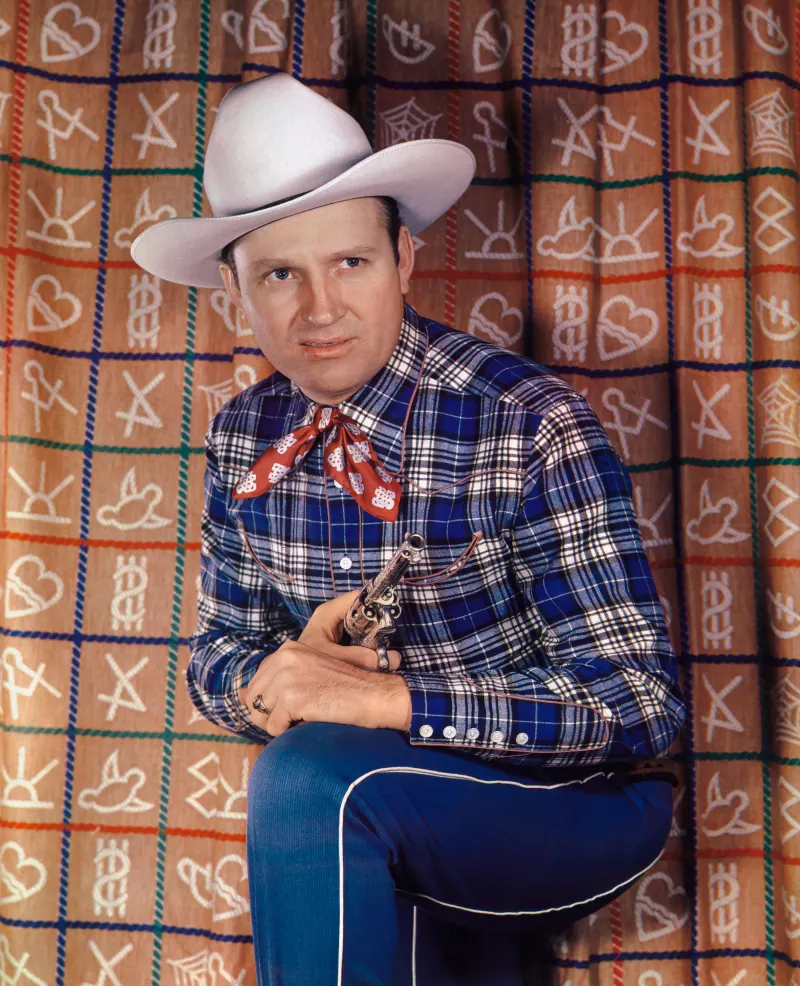
For its first decade, the music the record labels called hillbilly came mostly from the Southeast: the Appalachians, the Piedmont, the country around Atlanta and Nashville. In the 1930s it took a long turn west, and came back changed. It picked up a cowboy hat, a horn section and a drummer, and for twenty years people called it country and western.
The goat-gland doctor's radio station
The strangest chapter in the story of country radio belongs to John R. Brinkley, a Kansas "doctor" who had grown rich transplanting goat glands into men who wanted their youth back and advertising the operation on his own radio station. In 1930 the federal authorities took away both his medical licence and his broadcasting licence.
Brinkley simply moved across the border. Mexico did not honour American limits on transmitter power, and in the early 1930s he built a station at Villa Acuña, across the Rio Grande from Del Rio, Texas. Its successor, XERA, broadcast at a reported 500,000 watts — ten times anything allowed in the United States. At night it could be heard across most of North America.
What filled the airtime between the medical pitches was, very often, country music. The border blasters sold advertising by the minute, and hillbilly and cowboy singers were cheap, popular and happy to sell songbooks, baby chicks and patent medicines between songs. In the late 1930s the Carter Family themselves moved to Del Rio to broadcast on XERA, and those shows carried their songs to listeners who had never been near a record shop. A whole generation of musicians, from Texas to Canada, later said they learned their first songs from the border stations.
The singing cowboy
In the depths of the Depression, Hollywood discovered that a western with songs in it could fill a small-town cinema on a Saturday afternoon. Gene Autry — who had been a railroad telegraph operator, and then a Jimmie Rodgers imitator on WLS in Chicago — made the jump in 1934. His first starring film, Tumbling Tumbleweeds, came out the next year, and he made dozens more.
Autry was followed by Roy Rogers, who had sung with the Sons of the Pioneers, the harmony group whose "Tumbling Tumbleweeds" and "Cool Water" became cowboy standards; by Tex Ritter; and by a stream of imitators. The singing cowboy was a fantasy — few real cowhands had ever sung like that — but it gave the music a glamour the word "hillbilly" never had. In 1935 Patsy Montana's "I Want to Be a Cowboy's Sweetheart" became one of the first big hits by a woman in country music.
By 1949 the image had won. That year Billboard renamed its chart of the music "Country & Western", a name it kept until the early 1960s.
Western swing
The other western sound was made for dancing. In the dance halls of Texas and Oklahoma in the early 1930s, fiddle bands started to swing: they borrowed from jazz, from the big bands on the radio, from blues and from the Mexican music of the Southwest, and they played loud enough to fill a hall.
Two men from the same band set the course. Bob Wills and Milton Brown had played together in the Light Crust Doughboys, a group sponsored by a Fort Worth flour mill to advertise its product on the radio. Brown left to form the Musical Brownies, a hot, jazzy outfit, and might have become the biggest name in the style had he not died after a car crash in 1936.
Wills took his own band, the Texas Playboys, to Tulsa and to KVOO in 1934, and they were soon broadcasting every day at noon from Cain's Ballroom and playing dances there at night. The Playboys grew into something like a swing orchestra: fiddles, a horn section, a piano, drums, and Leon McAuliffe's electric steel guitar, whose "Steel Guitar Rag" became a standard. Wills himself called out and hollered over the band — his "ah-ha!" is the most recognisable sound in the genre. "New San Antonio Rose", in 1940, sold in the millions.
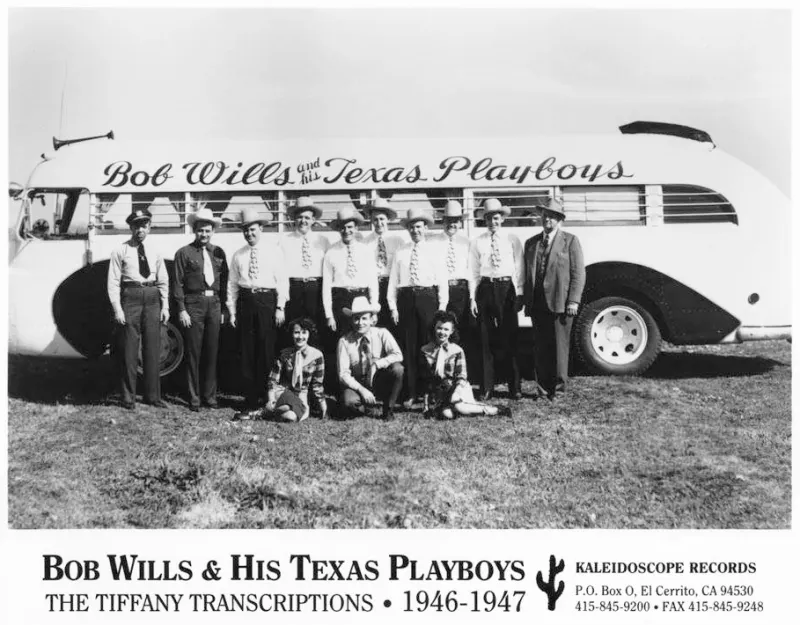

Western swing did not fit the Opry, which for years frowned on drums. When Wills played there in 1944 the story goes that the Opry wanted his drummer kept out of sight, and Wills would not have it. Whatever happened that night, the Playboys brought drums onto the most conservative stage in the music, and country never entirely took them off again.
After the war
The Second World War scattered the Western bands — Wills himself enlisted — and after it the big swing orchestras became too expensive to tour. But the style never died. It came back in the 1970s with Asleep at the Wheel, and in the records of George Strait, who has kept Bob Wills songs in his repertoire for his whole career. And the steel guitar and drums that came in with it were about to become the sound of the next great change in country music: the honky-tonk.
Hear it now
Our western and western swing stations keep the cowboy songs and the Texas dance-hall sound on the air, and Radio Free Texas plays the music that grew up out of it.