
The barn dances sold country music as wholesome family entertainment: fiddle tunes, gospel songs and comedy, the whole family gathered round the set on a Saturday night. The honky-tonk sold it as something else entirely. Its songs were about drinking, cheating, divorce and loneliness, and they were written to be heard over the noise of a crowded bar.
After Prohibition
When the United States repealed Prohibition in 1933, roadhouses opened along the highways of Texas and the Southwest, many of them in oil-boom towns full of men with wages to spend. A band in a place like that had to compete with fights, a jukebox and a room full of conversation. The music changed to suit the room: the steel guitar and the electric guitar came forward, the rhythm got a steady, danceable beat, and the lyrics turned to the life the customers were living.
The jukebox mattered as much as the bands. By the early 1940s there were hundreds of thousands of them in bars and cafés across the country, and the record companies noticed which songs earned the most nickels. In January 1944 Billboard began publishing a chart of the most-played "folk" records on jukeboxes — the ancestor of every country chart since.
Ernest Tubb
The man who made the honky-tonk sound famous was Ernest Tubb, a Texan who had idolised Jimmie Rodgers and who, when bar owners complained that nobody could hear his acoustic guitar, switched to an electric one. His 1941 record "Walking the Floor Over You" was a huge hit, and in 1943 he took the sound, electric guitar and all, to the Grand Ole Opry.
Tubb opened a record shop in Nashville in 1947 and started a radio show from the back of it, the Midnite Jamboree, broadcast on WSM after the Opry finished. Young singers queued to be heard there. It is still broadcast today, making it one of the longest-running shows on American radio.
Hank
Hank Williams was born in Alabama in 1923, learned guitar partly from a Black street musician called Rufus "Tee-Tot" Payne, and by his teens was singing on the radio in Montgomery. He was a troubled, fragile man — a painful spinal condition and heavy drinking shadowed his whole life — and one of the greatest songwriters the United States has produced.
He had his breakthrough on the Louisiana Hayride in Shreveport, and in 1949 his version of an old show tune, "Lovesick Blues", topped the charts. That June he made his debut on the Grand Ole Opry, and the audience would not let him leave the stage.
In the next three years he wrote and recorded a run of songs that has never been matched in country music: "Cold, Cold Heart", "Hey, Good Lookin'", "I'm So Lonesome I Could Cry", "Jambalaya", "Your Cheatin' Heart". He wrote plainly, about things everyone felt, in lines a child could remember, and he sang them in a voice that sounded like it meant every word. Under the name Luke the Drifter he also recorded spoken moral tales that showed a very different side of him.
It did not last. His drinking got worse, his marriage fell apart, and in August 1952 the Opry fired him for missing shows. On New Year's Day 1953, on his way to a concert in Ohio, he was found dead in the back seat of his Cadillac. He was 29. "Your Cheatin' Heart", released after his death, went to number one.
Kitty Wells answers back
Honky-tonk was mostly men singing about women, and in 1952 a woman sang back. Hank Thompson's hit "The Wild Side of Life" blamed a woman for going off to the honky-tonks; its answer song, "It Wasn't God Who Made Honky Tonk Angels", blamed the men. Kitty Wells, a quiet, churchgoing singer from Nashville who had nearly given up on a career, recorded it.
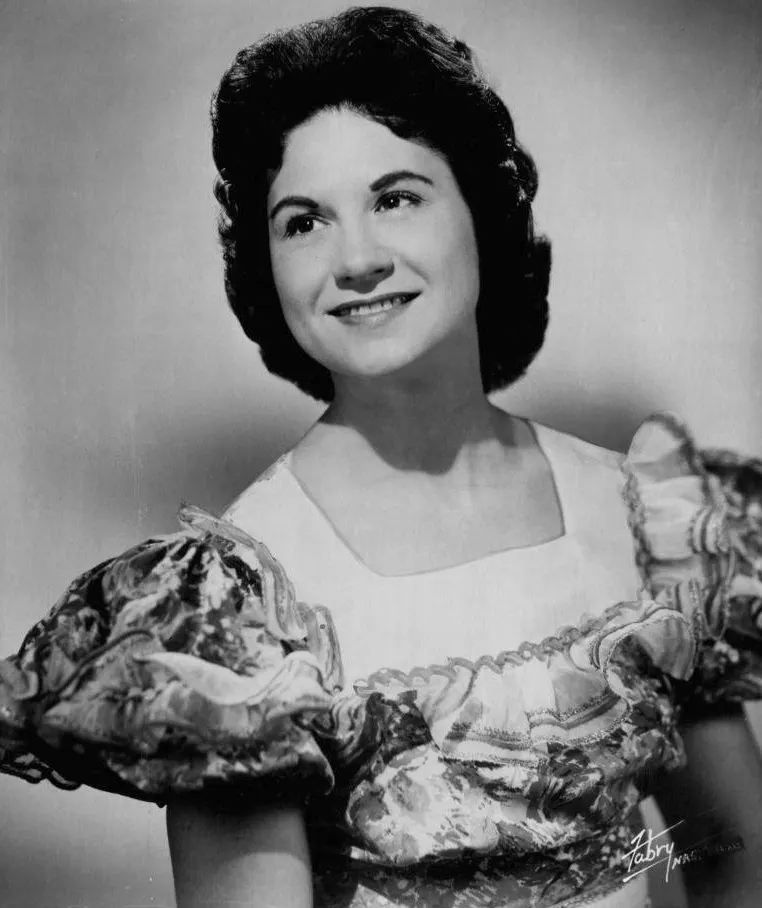

It made her the first woman to top the country chart as a solo artist, and it made her a star for twenty years. Some broadcasters thought the song too pointed for the airwaves. It opened the door for every woman in country music who came after her.
The sound spreads
Through the early 1950s the honky-tonk was the sound of country music. Lefty Frizzell, with his rolling, bending vocal style, at one point in 1951 had four records in the country top ten at once. Webb Pierce had hit after hit. Ray Price put a walking four-beat bass under his band, the Cherokee Cowboys, and "Crazy Arms" in 1956 set the shuffle rhythm that Texas dance halls still play. And a young singer from East Texas named George Jones, who had grown up listening to Hank on the radio, had his first hit in 1955.
The honky-tonk's grip was about to be broken — by a truck driver from Memphis whose records the country stations were not sure whether to play. That is the story of chapter six. But first, a man in Kentucky had been building a completely different kind of country music.
Hear it now
Our honky-tonk and classic country stations still play Hank, Lefty and Kitty every day. WSM — the station that fired Hank and then played his records for the next seventy years — is in the directory too.